
 Facebook
 X
X
 Pinterest
 Copy Link
Western Washington Real Estate Market Update- Quarter Four 2017

Posted in Western Washington Real Estate Market Update by Matthew Gardner, Chief Economist, Windermere Real Estate

ECONOMIC OVERVIEW
The Washington State economy added 104,600 new jobs over the past 12 months. This impressive growth rate of 3.1% is well above the national rate of 1.4%. Interestingly, the slowdown we saw through most of the second half of the year reversed in the fall, and we actually saw more robust employment growth.
Growth continues to be broad-based, with expansion in all major job sectors other than aerospace due to a slowdown at Boeing.
With job creation, the state unemployment rate stands at 4.5%, essentially indicating that the state is close to full employment. Additionally, all counties contained within this report show unemployment rates below where they were a year ago.
I expect continued economic expansion in Washington State in 2018; however, we are likely to see a modest slowdown, which is to be expected at this stage in the business cycle.
HOME SALES ACTIVITY
- There were 22,325 home sales during the final quarter of 2017. This is an increase of 3.7% over the same period in 2016.
- Jefferson County saw sales rise the fastest relative to fourth quarter of 2016, with an impressive increase of 22.8%. Six other counties saw double-digit gains in sales. A lack of listings impacted King and Skagit Counties, where sales fell.
- Housing inventory was down by 16.2% when compared to the fourth quarter of 2016, and down by 17.3% from last quarter. This isn’t terribly surprising since we typically see a slowdown as we enter the winter months. Pending home sales rose by 4.1% over the third quarter of 2017, suggesting that closings in the first quarter of 2018 should be robust.
- The takeaway from this data is that listings remain at very low levels and, unfortunately, I don’t expect to see substantial increases in 2018. The region is likely to remain somewhat starved for inventory for the foreseeable future.

HOME PRICES
 Because of low inventory in the fall of 2017, price growth was well above long-term averages across Western Washington. Year-over-year, average prices rose 12% to $466,726.
- Economic vitality in the region is leading to a demand for housing that far exceeds supply. Given the relative lack of newly constructed homes—something that is unlikely to change any time soon—there will continue to be pressure on the resale market. This means home prices will rise at above-average rates in 2018.
- Compared to the same period a year ago, price growth was most pronounced in Lewis County, where home prices were 18.8% higher than a year ago. Eleven additional counties experienced double-digit price growth as well.
- Mortgage rates in the fourth quarter rose very modestly, but remained below the four percent barrier. Although I anticipate rates will rise in 2018, the pace will be modest. My current forecast predicts an average 30-year rate of 4.4% in 2018—still remarkably low when compared to historic averages.
 Because of low inventory in the fall of 2017, price growth was well above long-term averages across Western Washington. Year-over-year, average prices rose 12% to $466,726.

DAYS ON MARKET
- The average number of days it took to sell a home in the fourth quarter dropped by eight days, compared to the same quarter of 2016.
- King County continues to be the tightest market in Western Washington, with homes taking an average of 21 days to sell. Every county in the region saw the length of time it took to sell a home either drop or remain static relative to the same period a year ago.
- Last quarter, it took an average of 50 days to sell a home. This is down from 58 days in the fourth quarter of 2016, but up by 7 days from the third quarter of 2017.
- As mentioned earlier in this report, I expect inventory levels to rise modestly, which should lead to an increase in the average time it takes to sell a house. That said, with homes selling in less than two months on average, the market is nowhere near balanced.

CONCLUSIONS
 This speedometer reflects the state of the region’s housing market using housing inventory, price gains, home sales, interest rates, and larger economic factors. For the fourth quarter of 2017, I have left the needle at the same point as third quarter. Price growth remains robust even as sales activity slowed. 2018 is setting itself up to be another very good year for housing.

Matthew Gardner is the Chief Economist for Windermere Real Estate, specializing in residential market analysis, commercial/industrial market analysis, financial analysis, and land use and regional economics. He is the former Principal of Gardner Economics, and has more than 30 years of professional experience both in the U.S. and U.K.
Windermere Foundation Surpasses $35 Million in Giving

Source: www.blog.windermere.com

The Windermere Foundation had another banner year in 2017, raising even more than it did the prior year thanks to the continued support of Windermere franchise owners, agents, staff, and the community. Over $2.4 million was raised in 2017, which is an increase of eight percent over the previous year. This brings our total to over $35.5 million raised since the start of the Windermere Foundation in 1989.
A portion of the money raised last year is thanks to our agents who each make a donation to the Windermere Foundation from every commission they earn. Additional donations from Windermere agents, the community, and fundraisers made up 66% of the money collected in 2017. These funds enable our offices to support local non-profits that provide much-needed services to low-income and homeless families in their communities.

SUMMARY OF FUNDS, GRANTS & DONATIONS IN 2017
- Organizations served: 472
- Number of individual grants fulfilled: 644
- Average grant amount: $2,964.04
- Average donation to the Windermere Foundation: $116.08
FUNDING BREAKDOWN
- Total amount disbursed in 2017: $2,249,357.14
- Total disbursed through grants: $1,908,843.54
- Scholarships: 5%
- Youth/Child Programs: 33%
- Emergency Assistance: 24%
- Shelter: 11%
- School Assistance: 5%
- Education/Counseling: 12%
- Administrative Expenses: 2%
- Fundraising Expenses: 8%
So how are Windermere Foundation funds used? Windermere offices decide for themselves how to distribute the money in their local community. Our offices have helped support school lunch and afterschool programs, housing assistance for homeless families, food banks, homeless shelters, and non-profits that provide basic necessities, such as shoes, clothing, toiletries, and blankets to families in need.
A very notable day in 2017 for the Windermere Foundation was November 15, when a record-breaking $253,782 was given in a single day. A total of 35 non-profit organizations benefitted from that day’s donations, including Attain Housing in Kirkland, WA, which received $56,000 from the Windermere Real Estate East, Inc. group of offices. Other organizations that received donations were Boys and Girls Club of Contra Costa in Walnut Creek, CA, and the Shady Cove School in Shady Cove, Oregon.
 2017 also marked the second year of our #tacklehomelessness campaign with the Seattle Seahawks, in which Windermere committed to donating $100 for every Seahawks home game defensive tackle to YouthCare, a non-profit organization that provides critical services to homeless youth. While the Seahawks didn’t make it to the playoffs this year, they did help us raise $31,800. When added to last year’s $35,000, that’s a total donation of $66,800. We are grateful for the opportunity to provide additional support to homeless youth thanks to the Seahawks, YouthCare, and the #tacklehomelessness campaign.
 Thanks to our agents, offices, and everyone who supports the Windermere Foundation, we are able to continue to make a difference in the lives of many families in our local communities. If you’d like to help support programs in your community, please click the Donate button.
To learn more about the Windermere Foundation, visit http://www.windermere.com/foundation.
Empty Nesters: Remodel or Sell?

source: www.blog.windermere.com

Your kids have moved out and now you’re living in a big house with way more space than you need. You have two choices – remodel your existing home or move. Here are some things to consider about each option.
Choice No. 1: Remodel your existing home to better fit your current needs.
- Remodeling gives you lots of options, but some choices can reduce the value of your home. You can combine two bedrooms into a master suite or change another bedroom into a spa area. But reducing the number of bedrooms can dramatically decrease the value of your house when you go to sell, making it much less desirable to a typical buyer with a family.
- The ROI on remodeling is generally poor. You should remodel because it’s something that makes your home more appealing for you, not because you want to increase the value of your home. According to a recent study, on average you’ll recoup just 64 percent of a remodeling project’s investment when you go to sell.
- Remodeling is stressful. Living in a construction zone is no fun, and an extensive remodel may mean that you have to move out of your home for a while. Staying on budget is also challenging. Remodels often end up taking much more time and much more money than homeowners expect.
Choice No. 2: Sell your existing home and buy your empty nest dream home.
- You can downsize to a single-level residence and upsize your lifestyle. Many people planning for their later years prefer a home that is all on one level and has less square footage. But downsizing doesn’t mean scrimping. You may be able to funnel the proceeds of the sale of your existing home into a great view or high-end amenities.
- A “lock-and-leave” home offers more freedom. As your time becomes more flexible, you may want to travel more. Or maybe you’d like to spend winters in a sunnier climate. You may want to trade your existing home for the security and low maintenance of condominium living.
- There has never been a better time to sell. Our area is one of the top in the country for sellers to get the greatest return on investment. Real estate is cyclical, so the current boom is bound to moderate at some point. If you’re thinking about selling, take advantage of this strong seller’s market and do it now.
Bottom Line
If your current home no longer works for you, consider looking at homes that would meet your lifestyle needs before taking on the cost and hassle of remodeling. Get in touch with Tracie Gulit to discuss the best option for you.
Keep Herbs Alive and Well in Winter With These 5 Tactics

Source: www.blog.windermere.com
Temperatures may be dropping, but that doesn’t mean we have to bid farewell to our herb gardens. Cold-hardy herbs, such as chives, mint, oregano, parsley, sage and thyme, can often survive cold-winter temperatures while continuing to produce flavorful foliage, as long as they are provided with some protection or grown indoors. Even herbs like rosemary that are more cold-sensitive can survive winter using additional methods of protection. Let’s explore different ways we can prolong the herb harvest and enjoy the fresh taste of our favorite herbs throughout the cold of winter.

Herbs 1: Bachman’s Landscape Design – Tom Haugo, original photo on Houzz

Herbs 2: Home & Garden Design, Atlanta – Danna Cain, ASLA, original photo on Houzz
A glass cloche protects plants in the center of this raised bed in Atlanta.
1. Protect herbs from the cold by placing them in a cold frame or cloche. Covering herbs helps trap the heat that rises from the soil, elevating the temperature inside by several degrees. This can extend the growing season in both fall and spring.
Cold frames are topped with glass panes that slope downward and are situated so they face south. This ensures that the most sunlight will reach the plants inside, creating an environment that is several degrees warmer than outside.
Cloches are a smaller and more portable way to protect plants from the cold. Traditional ones are bell-shaped and made from glass. They can be expensive, but you can make your own by cutting off the bottom of a 1-gallon plastic milk jug or other large plastic container. Place each one over individual herb plants and nestle the bottom inch or two of the cloche into the soil to anchor it.

Herbs 3: The Room Illuminated, original photo on Houzz
2. Add a thick layer of coarse mulch over herbs. Many herbs can grow through the winter under the insulation provided from straw, shredded bark or other coarse mulch. In areas that experience moderate-winter cold, USDA Zone 6 and warmer, herbs will continue to produce some new growth despite some winter cold. Simply pull back the mulch and cut the herbs you need, then cover them back up. While they won’t produce as much new growth as they do in the warm season, you should be able to obtain a small harvest. Don’t worry if a layer of snow falls, as it will provide additional insulation for the herbs below. Once spring arrives, you can turn the mulch into the soil.
3. Pot up herbs and move them into a frost-free greenhouse or sun porch. If you’re growing herbs in the ground, you can transfer them to pots and move them to a protected spot. Select the herbs you want to keep growing over winter, such as chives, oregano, sage and thyme. Cut them back to 1 inch tall and, using a sharp shovel, divide them at their base, making sure to include the roots so each one will fit into the container. Use well-draining planting mix in the containers and plant each herb in a separate pot. They will grow back and you’ll be able to harvest their flavorful leaves until you transplant them back into the garden once spring arrives.
Related: Move Herbs to a Sunroom for Full Sun

Herbs 4: J M Interiors, original photo on Houzz
4. Grow herbs in front of a sunny window. Herbs can be grown from seed or cuttings and make a great addition to a sunny kitchen window that gets at least six hours of sunlight. If using artificial lighting, 14 hours is usually sufficient. The temperature should range between 60 and 70 degrees Fahrenheit, or 15.6 and 21.1 degrees Celsius, for best results. You can transplant herbs from the garden or begin from scratch by sowing seed.
The rewards of growing herbs indoors throughout the winter are great when the fresh flavor of summer is within arm’s reach. Chives, oregano, parsley and thyme are just a few of the easiest herbs to grow on a sunny windowsill. Use a well-draining planting mix in your container. Water deeply when the top inch of soil is almost completely dry.

Herbs 5: Noelle Johnson Landscape Consulting, original photo on Houzz
5. Extend the life of fresh herbs by putting them in water. Herbs such as basil and mint grow quickly when placed in a container of water for a few weeks. Other herbs that work well in water are sage, oregano and thyme. When placed in water, they begin to produce roots and will grow new leaves. This is a useful way to prolong the harvest, whether you bring in cuttings from the garden or buy fresh herbs at the grocery store.
The process is easy. Simply cut the ends of each stem and put them in a small jar or cup filled with water. Be sure to remove any lower leaves so they won’t be submerged in the water. Place on a sunny windowsill.
The leaves produced indoors will be thinner and slightly less flavorful than those grown outdoors but will still add welcome flavor to your favorite dishes. Refill the water as needed and enjoy the prolonged harvest for several weeks to come.
Matthew Gardner’s 2018 Housing Forecast
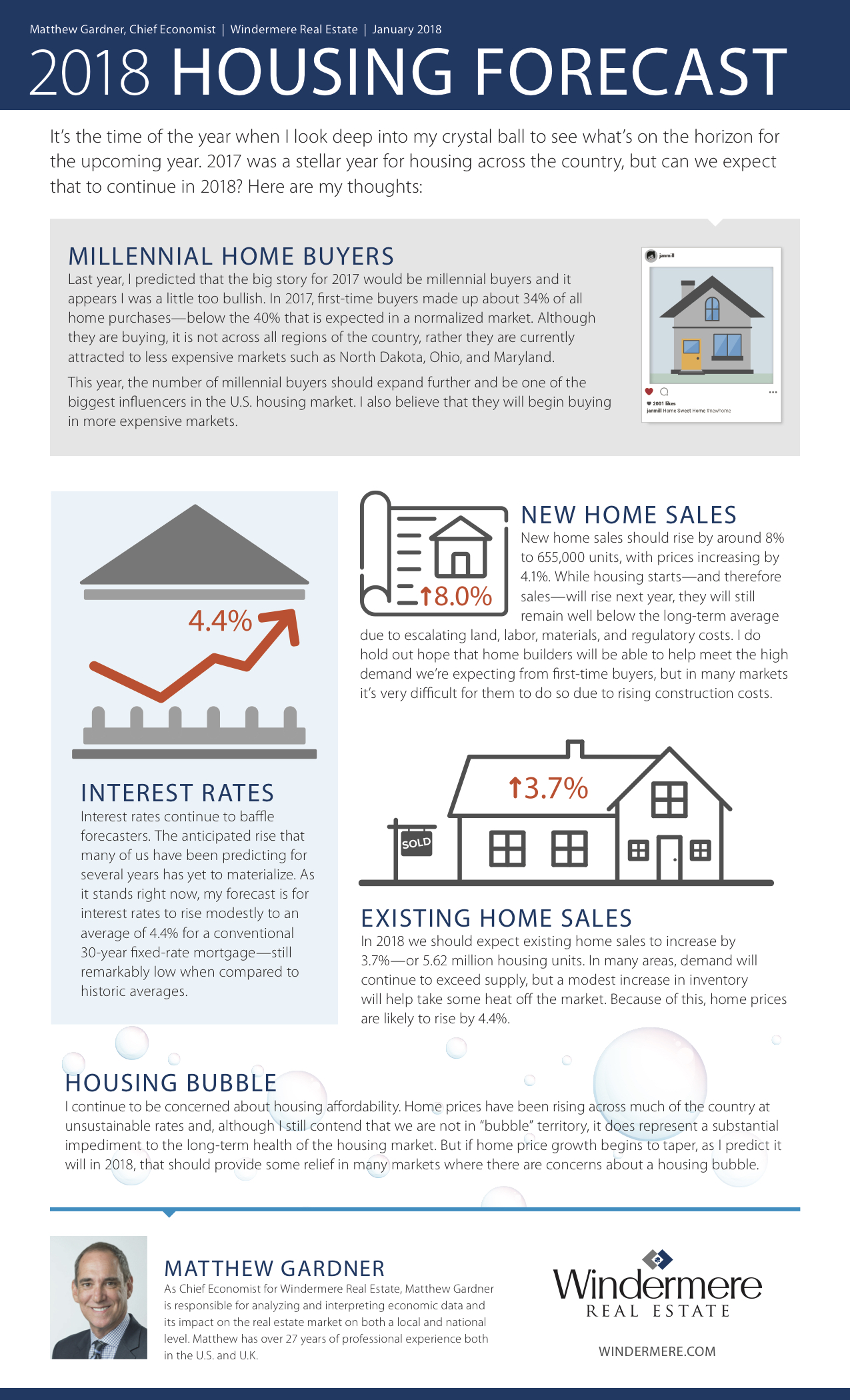
Windermere is fortunate to have Chief Economist Matthew Gardner on staff to provide valuable analysis of the economy and housing market. Matthew recently completed his national forecast which details his predictions for the 2018 housing market.

13 Appliance Tips & Hacks for Household Chores

source: www.blog.windermere.com

Modern home appliances make our lives so much easier: They tackle dreaded household chores, saving us time and effort. There are lots of ways to use them, however, that you may not have thought of before. From cleaning your ceiling fixtures in the dishwasher to vacuuming your pet, here are 13 little-known tricks for getting more than your money’s worth from your appliances.
- Sanitize small toys and more. Use your dishwasher to wash and sanitize teething rings, small plastic toys, mouth guards, and even baseball caps. Place items on the top rack and run the dishwasher as usual with detergent (without any dirty dishes). Put smaller items in a small mesh laundry bag so that they don’t move around.
- Clean ceiling fixtures. At least once or twice a year, remove and clean your glass ceiling fixtures and light covers in an empty dishwasher. Run the machine on the normal cycle.

- Eliminate wrinkles from clothing. To smooth out wrinkled clothes or linens left too long in the dryer, toss a damp, lint-free cloth in with them. Run the load on the lowest setting for 10 to 15 minutes. Newer dryers also feature a steam setting that removes wrinkles and refreshes clothing between wears.
- Disinfect sponges and dishcloths. Kitchen sponges and dishcloths contain billions of germs. Clean and disinfect them daily by zapping them on high in the microwave for 2 minutes to kill germs.
- Freshen up your curtains. Vacuum heavy drapes with the upholstery attachment. Use the dusting brush attachment for lighter drapes. Wash sheer curtains in the washing machine on the delicate cycle, then hang them up while they’re damp to prevent wrinkles.
- Remove wax from fabric or carpet. To get rid of wax on a tablecloth, place it in your freezer until the wax is hard. Then put a flat paper bag over the wax and another under the fabric. Iron the top bag with a medium-hot iron until all the wax transfers to the bag. To remove wax from a carpet or rug, place an ice pack on the spot until the wax hardens. Shatter the wax and vacuum up the chips.
- Clean baseboards. Dusting baseboards can be a backbreaking chore. Use your vacuum cleaner and the dusting brush attachment to avoid having to bend down. Do the same to clean chair and table legs.

- Organize your fridge. Use the built-in features of your refrigerator to organize food by category. Designate certain shelves or areas for leftovers, preferably front and center, so you don’t forget they’re in there. Use special-purpose bins for their intended use: crispers for vegetables, deli trays for deli meats and cheeses, cold storage trays for meats. Newer models also feature convertible cooling zones to keep food fresh.
- Dust blinds. Extend the blinds fully and turn the slats to the closed position. Use the dusting brush attachment on your vacuum cleaner to clean the slats from top to bottom. Then open and reclose the slats in the opposite direction and repeat the process.
- Clean your microwave. The best time to clean your microwave is immediately after using it. Thanks to residual steam, all you have to do is wipe it out with a paper towel or damp sponge. To clean old messes, microwave 2 cups of water on high for 5 minutes. The steam will soften cooked-on spills, which you can wipe off with a paper towel or cloth.

- Exterminate dust mites. Dust mites live off human and animal dander and other household dust particles. They thrive in sofas, carpets, and bedding. Use the upholstery attachment to vacuum your mattress and upholstered furniture regularly to minimize dust mites. Be sure to empty the canister in an outdoor trashcan.
- Groom your pet. If your dog or cat doesn’t hide when you get out your vacuum cleaner, try using the dusting brush attachment to brush your pet. It’s a gentle way to collect shedding fur.
- Remove grime from shower liners. Wash plastic shower curtain liners in the washing machine with hot water and detergent on the regular cycle. Throw in a small bath towel to help “scrub” mildew and soap scum off the liner. Then rehang the liner and let it air-dry.
Have you found any unusual cleaning hacks for your appliances? Share in the comments below!
Organizing and cleaning expert Donna Smallin Kuper writes for The Home Depot about easy organization hacks, including the best ways to use your appliances. To view The Home Depot’s selection of appliances, click here.
This article is editorial content that has been contributed to our site at our request and is published for the benefit of our readers. We have not been compensated for its placement.
Western Washington Real Estate Market Update

Source: www.blog.windermere.com

ECONOMIC OVERVIEW
The Washington State economy has been expanding at a rapid pace but we are seeing a slowdown as the state grows closer to full employment. Given the solid growth, I would expect to see income growth move markedly higher, though this has yet to materialize. I anticipate that we will see faster income growth in the second half of the year. I still believe that the state will add around 70,000 jobs in 2017.
Washington State, as well as the markets that make up Western Washington, continue to see unemployment fall. The latest state-wide report now shows a rate of 4.5%—the lowest rate since data started to be collected in 1976.
I believe that growth in the state will continue to outperform the U.S. as a whole and, with such robust expansion, I would not be surprised to see more people relocate here as they see Washington as a market that offers substantial opportunity.
HOME SALES ACTIVITY
- There were 23,349 home sales during the second quarter of 2017. This is an increase of 1.1% from the same period in 2016.
- Clallam County maintains its position as number one for sales growth over the past 12 months. Double-digit gains in sales were seen in just three other counties, which is a sharp drop from prior reports. I attribute this to inventory constraints rather than any tangible drop in demand. The only modest decline in sales last quarter was seen in Grays Harbor County.
- The number of homes for sale, unfortunately, showed no improvement, with an average of just 9,279 listings in the quarter, a decline of 20.4% from the second quarter of 2016. Pending sales rose by 3.6% relative to the same quarter a year ago.
- The key takeaway from this data is that it is unlikely we will see a significant increase in the number of homes for sale for the rest of 2017.

HOME PRICES
- Along with the expanding economy, home prices continue to rise at very robust rates. Year-over-year, average prices rose 14.9%. The region’s average sales price is now $470,187.
- Price growth in Western Washington continues to impress as competition for the limited number of homes for sale remains very strong. With little easing in supply, we anticipate that prices will continue to rise at above long-term averages.
- When compared to the same period a year ago, price growth was most pronounced in San Juan County where sale prices were 29.2% higher than second quarter of 2016. Eight additional counties experienced double-digit price growth.
- The specter of rising interest rates failed to materialize last quarter, but this actually functioned to get more would-be buyers off the fence and into the market. This led to even more demand which translated into rising home prices.
 Along with the expanding economy, home prices continue to rise at very robust rates. Year-over-year, average prices rose 14.9%. The region’s average sales price is now $470,187.
DAYS ON MARKET
- The average number of days it took to sell a home in the quarter dropped by 18 days when compared to the same quarter of 2016.
- King County remains the tightest market; homes, on average, sold in a remarkable 15 days. Every county in this report saw the length of time it took to sell a home drop from the same period a year ago.
- Last quarter, it took an average of 48 days to sell a home. This is down from the 66 days it took in the second quarter of 2016.
- Given the marked lack of inventory, I would not be surprised to see the length of time it takes to sell a home drop further before the end of the year.

CONCLUSIONS
 This speedometer reflects the state of the region’s housing market using housing inventory, price gains, home sales, interest rates, and larger economic factors. For the second quarter of 2017, I moved the needle a little more in favor of sellers. To define the Western Washington market as “tight” is somewhat of an understatement.
Inventory is short and buyers are plentiful.
Something must give, but unless we see builders delivering substantially more units than they have been, it will remain staunchly a sellers’ market for the balance of the year.
Furthermore, increasing mortgage rates have failed to materialize and, with employment and income growth on the rise, the regional housing market will continue to be very robust.
 Matthew Gardner is the Chief Economist for Windermere Real Estate, specializing in residential market analysis, commercial/industrial market analysis, financial analysis, and land use and regional economics. He is the former Principal of Gardner Economics, and has over 25 years of professional experience both in the U.S. and U.K.
Why Owning a Home is Such a Smart Investment

Source: www.blog.windermere.com

After succumbing to the “Great Recession” ten years ago, the stock market has made a comeback. So, does that mean you should forget about buying a new house and invest in stocks instead? The answer to that question, say experts, depends on your investing savvy, your financial discipline, your age, and your current financial situation.
The first question you need to ask yourself is, “Am I disciplined enough to invest in stocks?” According to two professors who recently studied 30 years of personal-finance performance, you need to be someone with exceptional financial discipline if you want to earn real money in the stock market. Or, you could simply buy a house.
When you buy real estate, the down payment and monthly mortgage payments force you to set aside a significant amount of your earnings on a regular basis. It’s automatic. But if you can’t summon the same discipline to invest that same amount of money in the stock market on an equally regular basis, then stocks are probably going to be a losing proposition, according to the professors’ study.
“We find that if people don’t invest all the money, actually about 90% of the time, you’re better off buying real estate,” says Professor Eli Beracha, co-author of the study.
Other issues that make stock investing risky
Investing guru James Altucher wrote a column in The Wall St. Journal titled, “8 Reasons You Stink at Trading Stocks.” In it, he argues that most non-professionals don’t have the investing savvy required to be successful in the stock market. Here are a few telling excerpts:
- “Nine out of 10 people think they are above-average drivers. Nine out of 10 people think they are above-average investors. Both are mathematically impossible.”
- “Most people sell at the bottom and buy at the top—the opposite of what you want to do as an investor—because they let emotions get in the way of patience and strategy.”
- “It’s really hard to own stocks. It’s not just picking a stock and watching it go up 1,000%. It’s buying it and sometimes watching it go down 80% before it ends up rising 20% above your purchase price. It’s waiting. It’s patience. Psychology is at least 80% of the game. And knowing when to sell? Even harder.”
Age matters
When you’re young, many financial advisors encourage investing in things like individual stocks. With a long career ahead, you have time to wait for any bad investments to turn around before you may really need the money. But once you’re a little older, with a family, and starting to focus on your financial future, that’s when advisers recommend you buy things like real estate—a conservative investment with a long history of stable, predictable earnings.
The type of loan you choose also makes a difference
If you want to both own a home and invest in stocks, consider a 30-year home loan, which will significantly reduce your monthly payments and leave you with extra money for playing the market. (Just remember the tradeoff: You’ll end up paying thousands of dollars more in interest over the life of the loan.)
If you don’t have a burning desire to play the stock market, choose a 15-year home loan. You’ll pay less interest over the life of the loan, you’ll build equity faster, and, obviously, you’ll be mortgage-free 15 years sooner.
The tax advantages of owning real estate
As a homeowner, you’re entitled to a bevy of tax benefits you don’t get as a stock investor. You can deduct your mortgage interest and property taxes from your annual tax return. Plus, depending on your circumstances, you could also get a deduction or credit for any home-office expenses, moving expenses, capital gains, any “points” used to lower your interest rate, and more.
One caveat: investing in real estate takes time
No matter what some of those reality TV programs show, buying a home should not be viewed as a get-rich-quick scheme. But if you think you’re ready to put down roots for as long as seven years, chances are very good that any home you purchase will appreciate significantly during that time (even if the economy runs into some bumps along the way).
The non-financial benefits
Of course, not all of the benefits of owning a home are financial. For most Americans, their home is a source of tremendous pride, comfort, security and freedom. Most of us also use our homes to showcase our personality, through paint colors, furnishings, landscaping, yard signs, holiday decorations and so much more.
Yes, the stock market is on an upswing currently (depending on the week), but if you want an investment with a long-term track record of consistent returns—plus tax breaks and a variety of personal perks—you may want to buy a home instead.
If you have questions about the buying or selling process, or are looking for an experienced agent in your area, connect with me here.
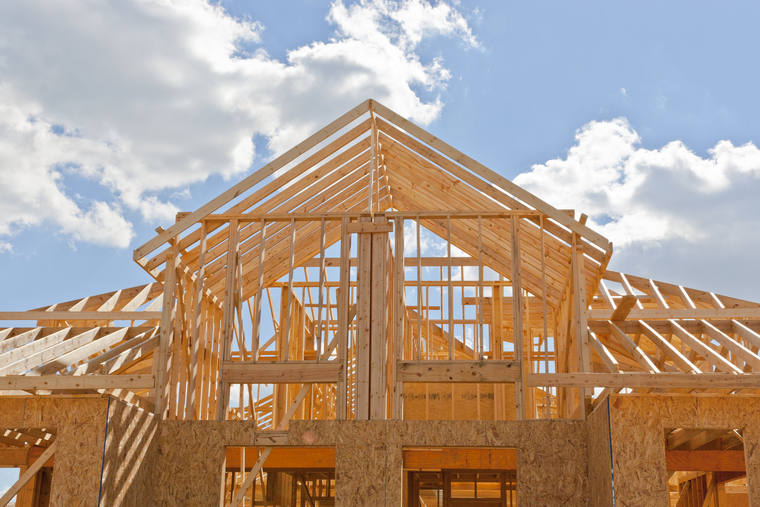
Why aren’t home builders building more homes?
source: www.blog.windermere.com
Posted in Inman News by Matthew Gardner, Chief Economist, Windermere Real Estate

This article originally appeared on Inman.com
Housing markets all across the U.S. are suffering from serious shortages of homes for sale, and this isn’t expected to change in the foreseeable future.
When I think about inventory levels and the fact that demand is clearly outstripping supply, it makes me question why homebuilders aren’t stepping up to the plate to meet all this pent-up demand.
Interestingly enough, there are several obstacles holding builders back that I think are worthy of further discussion.
According to my calculations, since 2008, builders have started construction of new single-family homes at an average annual rate of about 594,000 units per year. For context, the average annual rate of new-home starts between 1963 and 2007 was over 1.1 million, so we have been behind the ball for some time now.
Although new-home starts have now risen to 835,000 units from the historic low of 353,000 units that we saw in 2009, we are still well below the level that meets demand given new household formations.
Since 2009, new housing supply has consistently fallen short of new housing demand. The shortfall was the largest in 2011 at 465,000 housing units, and cumulatively through 2015, the total shortfall was 2.2 million housing units.
Currently, I estimate that the amount of housing supply necessary to just keep pace with demand is probably around 1.1 million housing units a year; however, housing completions as of May were running at an annual rate of just 817,000 — far below what is needed.
So why is this? The simple answer is that it is very expensive to build a new home.
The expense of building a new home can be essentially broken down into three components: land, labor and materials.
Land
Let’s start with land, which is expensive, and it is very expensive in markets where land availability is scarce (either because of unique topography or political limitations — or both).
This is further exacerbated in markets where the economy is growing rapidly and attracting more new residents.
Another hindrance is the cost of obtaining a building permit, which is remarkably high, thanks to government regulations, and can account for almost 25 percent of the final price of a new single-family home.
Labor
The second thing to consider is labor. As the housing market was entering the Great Recession, many construction workers were laid off and have not subsequently returned.
In fact, my calculations indicate there are currently over 200,000 job openings in the construction industry, and this lack of supply combined with high demand for labor, has led to rising labor costs.
Material costs
Finally, material costs. The cost of homebuilding materials have risen by almost 5 percent due to high demand and low supply. Everything from the copper used in wiring to the lumber used for framing, continues to escalate at fairly rapid rates.
All of this combined makes it very expensive to build homes — especially affordable homes.
In fact, the National Association of Homebuilders stated back in 2015 that it is difficult to build a home anywhere in America for less than $300,000. Then take into account that only 4 percent of all new homes sold in 2016 were priced below $150,000, and in the Western U.S., just 6 percent were priced below $200,000.
Conditions are particularly tight at the more affordable end of the market, clearly reflecting the fact that fewer entry-level homes are being built.
Between 2004 and 2016, completions of smaller single-family homes (under 1,800 square feet) fell from nearly 500,000 units to only 136,000. Similarly, the number of townhouses built in 2016 (98,000) was less than half the number started in 2005.
It is clear that we need more housing solutions to address the shortages out there, but it won’t be easy.
From a builder’s perspective, they cannot change material costs, nor can they force workers into the construction industry.
However, what they can do, and what needs to be done, is try and shift government policy to better address permit fees, hookup fees, impact fees and the like. If these costs could be lowered, I believe that many builders would have the ability to ramp-up activity in a fairly dramatic fashion.
Given how important increasing the supply of new homes is to the long-term health of the market, I hope that the efforts being undertaken at the national level by the NAHB, and the local level by various homebuilder associations, start to see positive results in the near future.
For the sake of our housing market, we need to make it easier for builders to do what they do best: build homes.
Selling Your Home: The Impact of Staging

Source: www.blog.windermere.com

How can you make your home more attractive to potential buyers? The answer is with some “home staging”. According to the Wall Street Journal, implementing some basic interior design techniques can not only speed up the sale of your home but also increase your final selling price.
It all comes down to highlighting your home’s strengths, downplaying its weaknesses, and making it more appealing to the largest pool of prospective buyers. Staging an empty house is also important to help buyers visualize how the spaces would be used, and to give the home warmth and character.
Cohesiveness Is Key
Make the inside match the outside. For example, if the exterior architectural style of your house is Victorian or Craftsman Bungalow, the interior should be primarily outfitted with furniture styles from essentially the same era. Prospective buyers who like the exterior style of your home are going to expect something similar when they step inside. If the two styles don’t agree or at least complement each other, there is likely going to be an immediate disconnect for the buyer. Contact your agent to help determine the architectural style of your home and what makes it unique.
There is always room for flexibility. Not all your furnishings need to match, and even the primary furnishings do not need to be an exact match to the architectural style of your home. To create cohesion, you simply need to reflect the overall look-and-feel of the exterior.
The Role of Personal Expression
Every home is a personal expression of its owner. But when you become a seller, you’ll want to deemphasize much of the décor that makes a place uniquely yours and instead look for ways to make it appeal to your target market. Keep in mind, your target market is made up of the group of people most likely to be interested in a home like yours—which is something your agent can help you determine.
Your Goal: Neutralize and Brighten
Since personal style differs from person to person, a good strategy to sell your home is to “neutralize” the design of your interior. A truly neutral interior design allows people touring the house to easily imagine their own belongings in the space—and to envision how some simple changes would make it uniquely their own.
In short, you want to downplay your own personal expression, while making it easy for others to mentally project their own sense of style on the space. Ideas include:
- Paint over any bold wall colors with something more neutral, like a light beige, a warm gray, or a soft brown. The old advice used to be, “paint everything white,” but often that creates too sterile of an environment, while dark colors can make a room look small, even a bit dirty. Muted tones and soft colors work best.
- Consider removing wallpaper if it’s a bold or busy design.
- Replace heavy, dark curtains with neutral-colored shear versions; this will soften the hard edges around windows while letting in lots of natural light.
- Turn on lamps, and if necessary, install lighting fixtures to brighten any dark spaces—especially the entry area.
- Make sure everything is extremely clean. You may even want to hire professionals to give your home a thorough deep clean. Remember, the kitchen and bathrooms are by far the two most important rooms in a house when selling, so ongoing maintenance is important.
The Importance of De-Cluttering
Above all, make sure every room—including closets and the garage—is clutter-free. Family photos, personal memorabilia, and collectibles should be boxed up. Closets, shelves, and other storage areas should be mostly empty. Work benches should be free of tools and projects. Clear the kitchen counters, store non-necessary cookware, and remove all those magnets from the refrigerator door.
The same goes for furniture. If removing a chair, a lamp, a table, or other furnishings will make a particular space look larger or more inviting, then by all means do it.
You don’t want your home to appear cold, un-loved, or unlived-in, but you do want to remove distractions and provide prospective buyers with a blank canvas of sorts. Plus, de-cluttering your home now will make it that much easier to pack when it comes time to move.
Where to Start
Contact your agent for advice on how to most effectively stage your home or for a recommendation on a professional stager. While the simple interior design techniques outlined above may seem more like common sense than marketing magic, you’d be surprised at how many homeowners routinely overlook them. And the results are clear: staging your house to make it more appealing to your target buyer is often all it takes to speed the sale and boost the price.
